ATS Open Roles Failure
COE #1 2/5/26 Ian Coutinho

Timeline
| Time (EST) | Event |
|---|---|
| 6:50 PM | Incident start. QR code displayed for applications; users reported infinite scrolling on the "Open Roles" page. |
| 7:30 PM | MongoDB SLA triggered a restart due to high load, resulting in persistent infinite loading states. |
| 7:45 PM | Loading ceased; teams/roles stopped showing altogether across the platform. |
| 8:40 PM | Initial database investigation; MongoDB checked for missing documents (incorrectly checked wrong schema). |
| 9:30 PM | Deep-dive code review initiated to identify failure points. |
| 9:50 PM | Mitigation: Allocated more RAM to the Authentik instance and restarted People Portal workers. Manually saved Team Recruitment Configs to restore the database. |
| 11:38 PM | Root Cause Identified: Discovered logic that deletes database documents on Authentik GROUP_NOT_FOUND errors, and confirmed Traefik returns 404 during Authentik memory exhaustion. |
Root Cause Analysis
The root cause was twice-fold:
- Infrastructure: Authentik workers reached memory limits, causing the service to crash.
- Logic: The error handling in the
AuthentikClientincorrectly assumed that any 404 response meant a group had been deleted in Authentik. It did not account for the reverse proxy (Traefik) returning a 404 when the upstream service was unreachable or misconfigured.
script.ts
try { ...} catch (e) { if (e instanceof AuthentikClientError && e.code === AuthentikClientErrorType.GROUP_NOT_FOUND) { console.warn(`Recruiting Team with PK ${team.teamPk} not found in Authentik. Cleaning up.`); await TeamRecruitingStatus.deleteOne({ teamPk: team.teamPk }).exec(); } else { throw e; }}This logic was triggered by the following catch block in AuthentikClient.getGroupInfo, which converted the Traefik 404 into a GROUP_NOT_FOUND error code:
script.ts
var RequestConfig: any = { ...this.AxiosBaseConfig, method: 'get', url: `/api/v3/core/groups/${teamId}/`, params: { /* Avoid Breaking Changes of Including Request Options, Default to True */ include_users: options?.includeUsers ?? true, include_children: options?.includeChildren ?? true, include_parents: options?.includeParentInfo ?? false }}...try { const res = await axios.request(RequestConfig) ...} catch (e) { log.error(AuthentikClient.TAG, "Get Teams List Request Failed with Error: ", e) if (axios.isAxiosError(e) && e.response?.status === 404) throw new AuthentikClientError(AuthentikClientErrorType.GROUP_NOT_FOUND) /* We Just Know that the Request Failed! */ throw new AuthentikClientError(AuthentikClientErrorType.GROUPINFO_REQUEST_FAILED)}Supporting Data
Database State
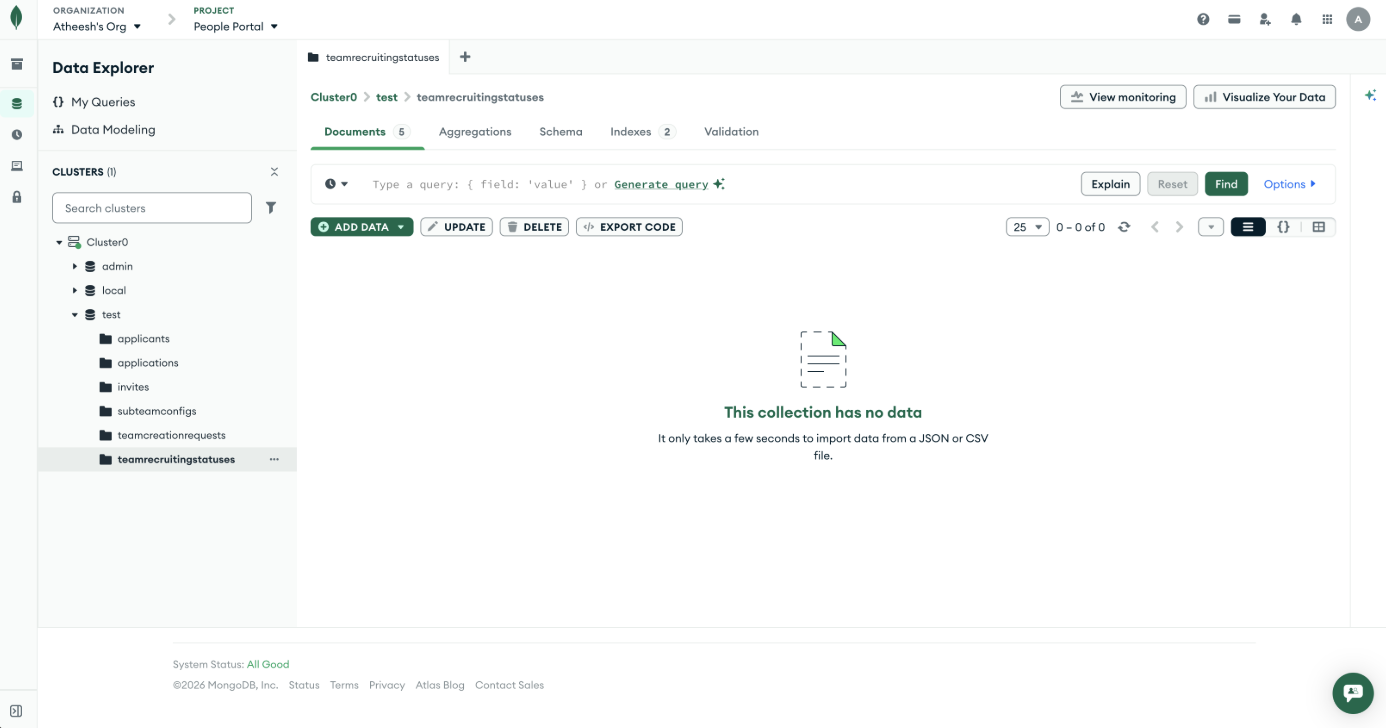
MongoDB collection teamrecruitingstatuses was found to be empty (0 documents).
Metrics
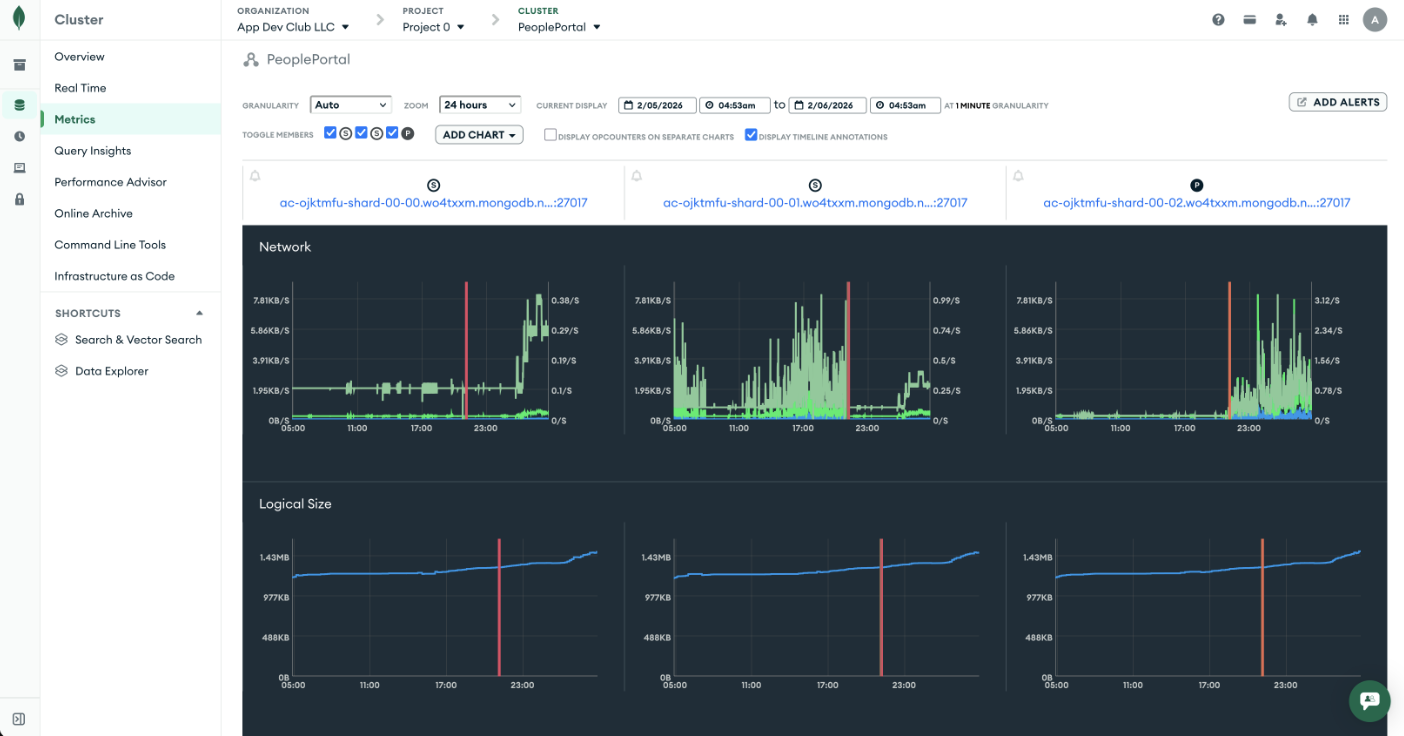
MongoDB Cloud metrics showed a significant drop in logical size and document count.
Replication
To verify the root cause, the failure was replicated in a local environment using the following steps:
- Code Analysis: Identified the logic in
ATSController.tsthat triggers adeleteOneoperation when anAuthentikClientErrorwith codeGROUP_NOT_FOUNDis caught. - Infrastructure Analysis: Observed that Traefik returns a 404 response when the Authentik service is unavailable (e.g., due to OOM), and the
AuthentikClienttranslates all 404s intoGROUP_NOT_FOUND. - Local Environment Setup:
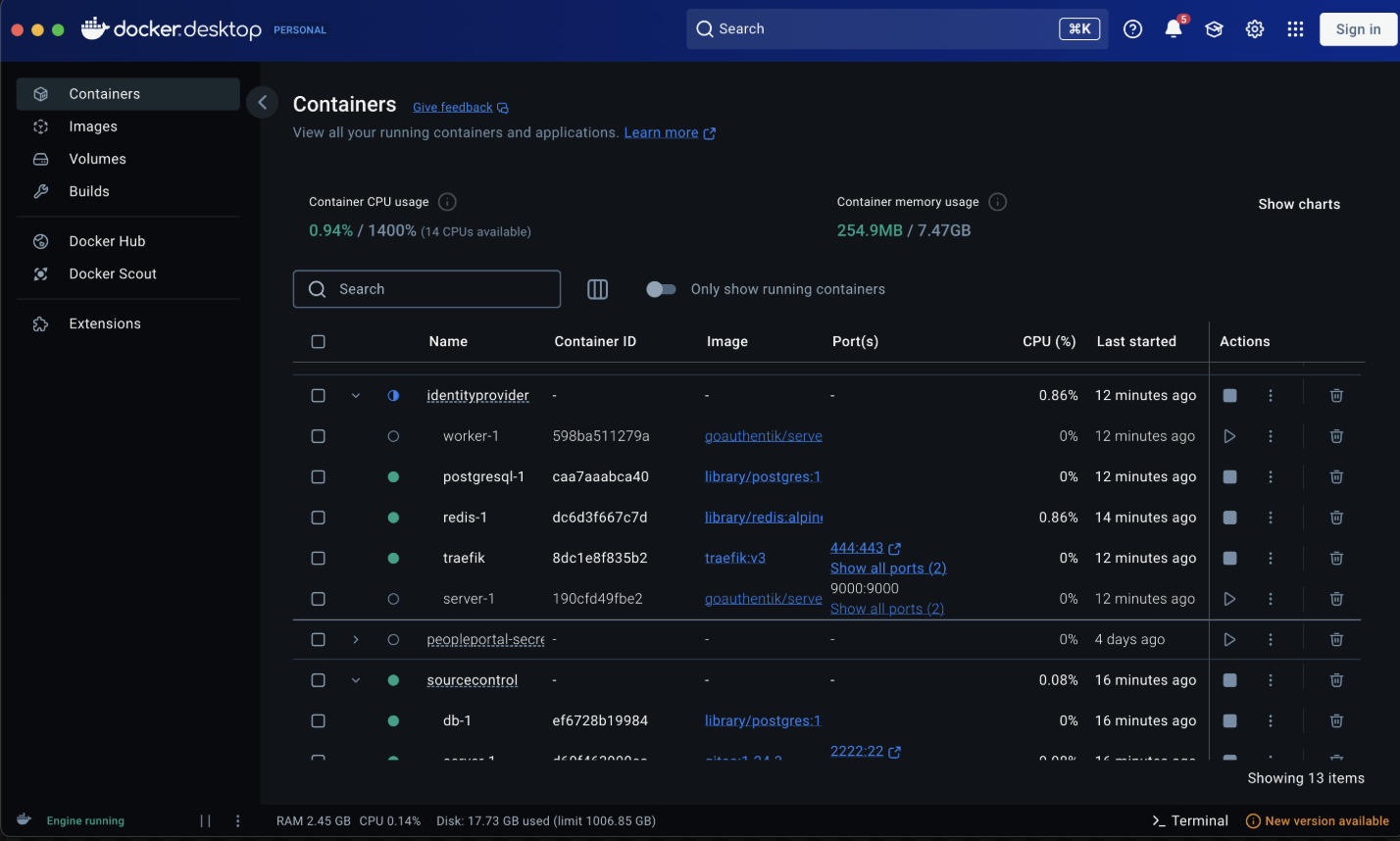
Docker Desktop showing the stack state during replication. - Ran Traefik on
localhostusing the source control Docker Compose configuration. - Modified
/etc/hoststo pointauth.appdevclub.comto127.0.0.1. - Configured Traefik to route traffic to the local Authentik instance.
- Ran Traefik on
- Incident Simulation:
- Loaded the
/applypage successfully while Authentik was running. - Shut down the Authentik container to mimic a crash/resource exhaustion.
- Reloaded the
/applypage.
- Loaded the
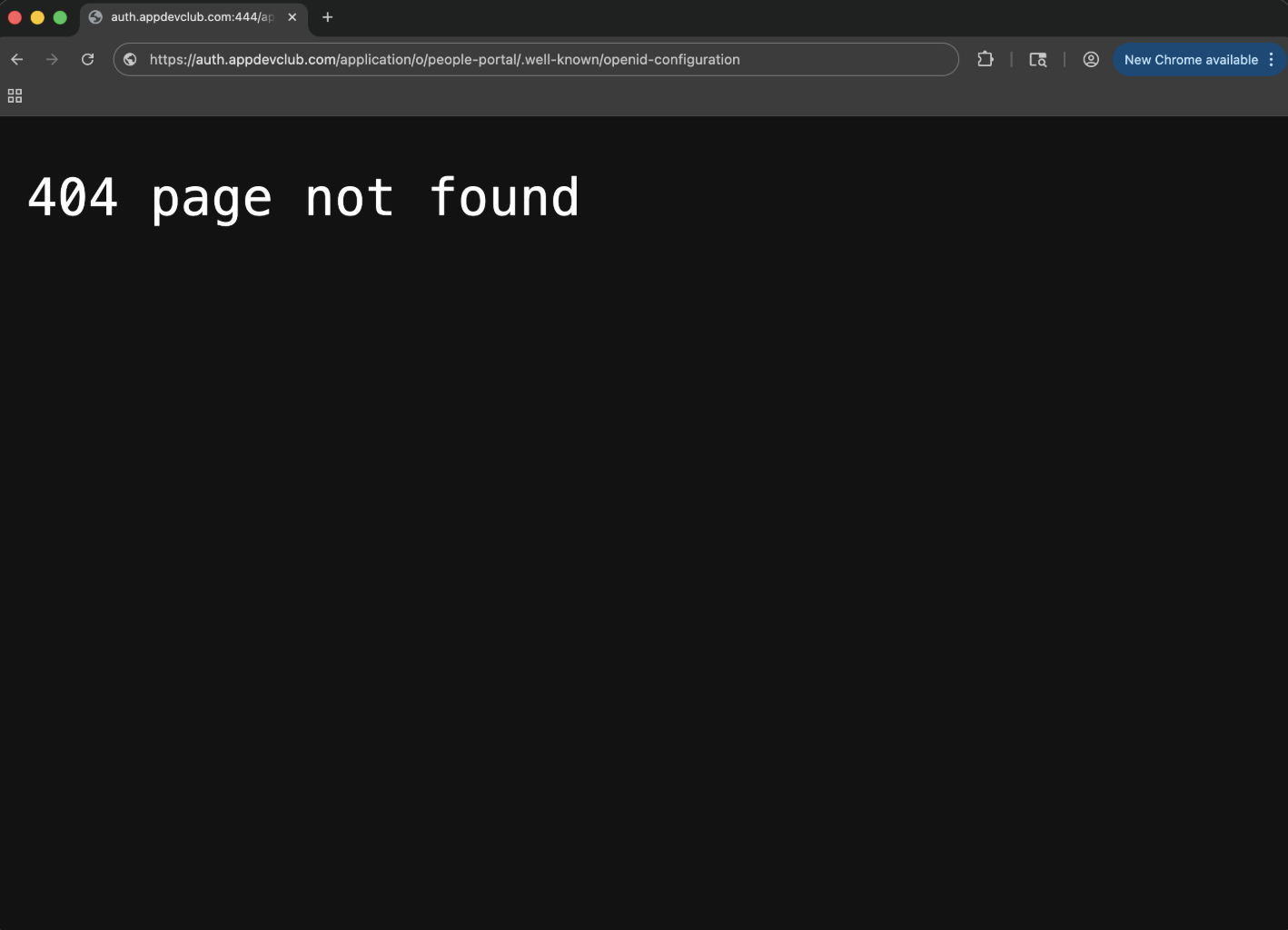
- Result: The server logs confirmed that the 404 from the proxy was interpreted as a missing group, and subsequent database queries showed that the
TeamRecruitingStatusdocuments were deleted.
Other Implications
- Reliability: The system failed in a non-graceful manner. Instead of a "read-only" or "error" state, it performed destructive actions (data deletion) during an partial outage.
- Security & Integrity: Data integrity was compromised by the automated cleanup script. The trade-off made to keep the DB "clean" was valued higher than data durability, which proved incorrect in this context.
Lessons
- Fail-Safe over Fail-Clean: Automated deletions should never be triggered by transient network or infrastructure errors.
- Error Specificity: 404 errors from a proxy should be distinguished from 404 errors from a known API endpoint.
- Fire-Drill Verification: During incident response, ensure verification steps (like checking DB counts) are performed against the correct environment and schema.
Plan of Action
- Immediate: RAM allocation for Authentik increased to 6GB; service restarted.
- Logic Change: Updated
AuthentikClientto verify theX-Powered-By: Authentikheader on 404 responses before throwingGROUP_NOT_FOUND. This ensures that proxy-generated 404s (which lack this header) are treated as generic service errors rather than data-cleanup triggers.
script.ts
if (axios.isAxiosError(e) && e.response?.status === 404 && e.response?.headers['x-powered-by'] === 'authentik') throw new AuthentikClientError(AuthentikClientErrorType.GROUP_NOT_FOUND)